Water Well Drilling Rig: Unveiling The Core Technology Of Accessing Groundwater
Whether searching for stable groundwater sources, addressing droughts, or meeting water needs in remote areas, water well drilling rigs are indispensable tools in modern engineering. But how do these massive steel giants penetrate the hard strata to deliver life-giving water? Their operating principles blend mechanical force with geological wisdom.
The core working principle of water well drilling rig: rotary cutting drilling
Unlike traditional percussive drilling, modern, efficient water well drilling rigs primarily rely on rotary drilling technology. The core process can be summarized as follows: the drill bit rotates to cut the formation -> the drill pipe delivers power and forms a channel -> the circulating medium removes cuttings and protects the wellbore -> the drill pipe is extended section by section to the target depth.
Key Elements of Well Drilling Rig Operation and Geological Adaptability
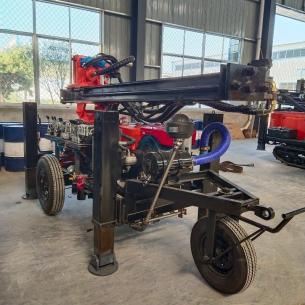
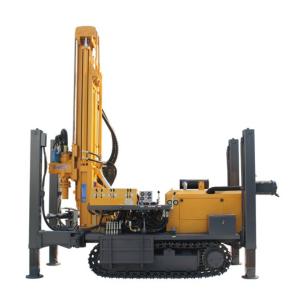
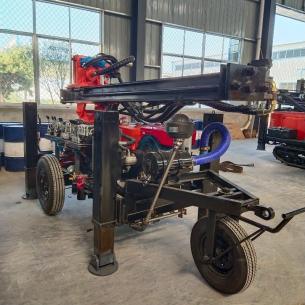
Drilling Rig Type Selection: Water well drilling rigs come in a variety of types, including truck-mounted, trailer-mounted, and crawler-mounted. Rotary drilling is the mainstream, but percussive drilling (relying on the weight of the drill bit to repeatedly impact and break the rock) or hybrid drilling (rotary + percussive) techniques may also be used in certain hard rock formations or shallow wells.
Matching the Drill Bit to the Formation: Selecting the most appropriate drill bit type (such as scraper bit, roller cone bit, diamond bit) and drilling rig equipment for different geological conditions is crucial for improving efficiency and reducing costs.
The Core Role of Drilling Fluid: Controlling the properties of drilling fluid (density, viscosity, and water loss) is crucial for wellbore stability, debris removal efficiency, and aquifer protection, and is the technical foundation for successfully drilling a good well.
FAQ
What's the maximum depth a water well drill can reach?
Capacity varies greatly. Small drills can reach tens to 100 to 200 meters; large, specialized water well drills can reach depths of over 1,000 or even tens of thousands of meters. This depth depends on the rig's power, drill pipe strength, and technical capabilities.
How long does it take to drill a water well?
This is greatly influenced by well depth, geological complexity, rig type, and the construction environment. A simple shallow well may be completed in a few days; a deep well or one that encounters complex formations (such as thick gravel layers or hard bedrock) may take weeks or even longer.
Summary
Water well drilling rigs, particularly modern models using rotary drilling technology, efficiently and safely penetrate complex formations through three key processes: powerful rotation of the drill bit to cut the ground, combined with power transmission through the drill pipe and drilling fluid circulation to remove chips and protect the wellbore. Ultimately, casing and cementing are used to establish a stable water extraction channel. Understanding their operating principles will help us more scientifically develop valuable groundwater resources and provide reliable support for production and life. Drilling fluid management and drill bit selection are key technical factors that determine the success and efficiency of a project.
Looking for professional and reliable water well drilling services? Explore Shandong Wogong Technology's advanced water well drilling rigs and solutions, or call our drilling experts for consultation!