What Are The Different Types of Geotechnical Drills?
Geotechnical drilling is the cornerstone of safe and successful construction, mining, and civil engineering projects worldwide. It provides the critical subsurface data needed to assess soil stability, bearing capacity, and potential risks. For project managers, engineers, and procurement specialists, selecting the appropriate geotechnical drilling rig is a technical decision with direct implications for data accuracy, project timelines, and cost efficiency. This guide provides a detailed overview of the primary types of geotechnical drills, their applications, and key selection criteria for international B2B buyers.
The Critical Role of Geotechnical Drilling in Modern Engineering
Before examining equipment, it is essential to understand why specialized geotechnical investigation is non-negotiable. Every structure—from a highway to a high-rise—relies on the ground beneath it. Inadequate or inaccurate site investigation can lead to catastrophic failures, costly redesigns, and prolonged delays. According to global industry analysis, the market for subsurface exploration equipment is steadily growing, driven by increased infrastructure investment, stricter safety regulations, and the expansion of renewable energy projects like wind farms, all of which require detailed soil and rock profiling.
Core Classifications: Understanding Drilling Methods
Geotechnical drills are primarily categorized by their method of obtaining samples and penetrating the subsurface. The choice depends on the geological conditions and the type of sample required (disturbed, undisturbed, or rock core).
1. Auger Drilling Rigs
Auger drills are among the most common and versatile types of geotechnical drilling equipment. They use a rotating helical screw (auger) to bring soil to the surface.
Applications: Ideal for shallow soil sampling, environmental monitoring, preliminary investigations, and installing instrumentation. They excel in unconsolidated materials like clay, silt, and sand.
Key Sub-Types:
Hollow-Stem Augers: Allow for continuous sampling through the center without removing the auger flights, enabling standard penetration tests (SPT) and undisturbed sampling.
Solid-Stem Augers: Used for faster advancement to target depths before sampling with separate tools.
2. Rotary Drilling Rigs
For harder formations where augers are ineffective, rotary drilling rigs are the preferred solution. They utilize a rotating drill bit and circulate a fluid (drilling mud or air) to remove cuttings.
Applications: Essential for deep soil investigation and rock coring operations. Used for foundation design for bridges, dams, and skyscrapers, as well as mineral exploration.
Key Sub-Types:
Direct Rotary Rigs: Use tri-cone or drag bits to crush rock, circulating fluid to bring cuttings to the surface. Best for fast penetration in fractured rock.
Core Drilling Rigs: Employ diamond-impregnated or tungsten carbide core barrels to extract intact cylindrical rock samples (core). This is critical for assessing rock strength, fracturing, and quality for engineering design.
3. Percussion and Cable Tool Rigs
This traditional, robust method uses a heavy weight repeatedly lifted and dropped to crush the formation.
Applications: Effective in highly unconsolidated, bouldery, or weathered rock where other methods may struggle. Often used for monitoring well installation and exploratory drilling in specific challenging ground conditions.
4. Direct Push Technology (DPT) and Cone Penetration Test (CPT) Rigs
These soil investigation rigs represent a high-efficiency, non-rotary approach. They use hydraulic rams to push rods and sampling tools directly into the ground.
Applications:
CPT Rigs: Push a conical probe to continuously measure tip resistance and sleeve friction, providing real-time, high-resolution geotechnical data.
DPT Rigs: Push sampling tools, groundwater samplers, or sensors for fast, low-cost, and minimally invasive environmental and geotechnical screening.
5. Sonic (Vibratory) Drilling Rigs
A technologically advanced method, sonic drilling rigs use high-frequency resonance to fluidize soil and rock along the drill string, allowing for remarkably fast and continuous core sampling.
Applications: Superior in complex, mixed geology and for obtaining continuous, undisturbed samples in both overburden and rock. Valued for critical projects where sample quality is paramount, despite a higher initial investment.
Mobile Carriers: Matching the Rig to the Site
The drilling method is only one part of the equation. The carrier platform determines accessibility and mobility.
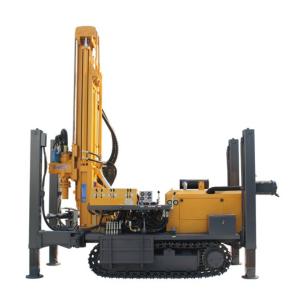
Track-Mounted Rigs: Offer superior stability and extremely low ground pressure for work on soft, sensitive, or steep terrain.
Truck-Mounted Rigs: Provide excellent road mobility and faster setup for urban or multi-site projects with good access.
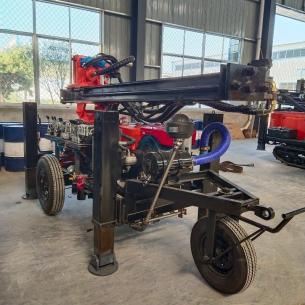
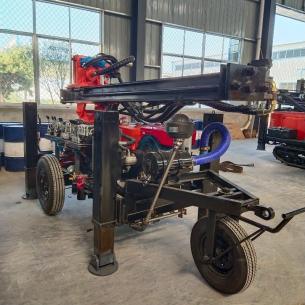
Compact & Portable Rigs: Small, modular rigs or all-terrain vehicle (ATV)-mounted drills are essential for confined spaces or remote, roadless locations.
Selection Criteria: How to Choose the Right Geotechnical Drill
Selecting the optimal geotechnical drilling machine requires a systematic evaluation of project parameters:
Selection Factor | Key Considerations |
Project Objectives | Is the goal soil classification, rock strength analysis, groundwater monitoring, or in-situ testing? |
Site Geology | Soil type, presence of boulders, depth to bedrock, and groundwater level. |
Required Sample Type | Disturbed samples (SPT), undisturbed tubes (Shelby tubes), or intact rock core. |
Depth & Diameter | Target investigation depth and necessary hole diameter for tools/tests. |
Site Accessibility | Urban setting, remote wilderness, soft ground? Dictates carrier type. |
Regulations & Standards | Must comply with local (e.g., ASTM, Eurocode) and project-specific standards. |
Innovations and Industry Trends
The geotechnical drilling industry is evolving with a focus on data integration and efficiency. Key trends include:
Integrated Sensor Systems: Rigs equipped with downhole sensors that provide real-time lithological data.
Hybrid Power Systems: Increasing use of electric or hybrid power packs for reduced emissions and noise, especially in urban projects.
Advanced Automation: Features like automated rod handling and digital depth/angle monitoring improve safety, precision, and repeatability of operations.
Partnering with a Specialist Manufacturer
For businesses that require reliable, high-performance equipment, partnering with an experienced manufacturer is crucial. A company like Shandong Wogong Technology Co., Ltd. understands that geotechnical exploration is data-driven. They engineer versatile drilling rigs that can be configured for multiple methods—such as a single carrier platform capable of supporting both auger and rotary tooling—providing contractors with flexible and cost-effective solutions for a wide range of subsurface investigation challenges.
Conclusion: Investing in the Right Foundation of Knowledge
Understanding the different types of geotechnical drills is the first step in ensuring the success of any ground-related project. The correct rig is not merely a tool for making a hole; it is a sophisticated data-gathering system that informs every subsequent engineering decision. By carefully matching the drilling method and carrier to your specific site conditions and project goals, you invest in accuracy, efficiency, and ultimately, project safety.
Are you planning a site investigation project and need expert guidance on selecting the optimal geotechnical drilling equipment?
Contact the technical team at Shandong Wogong Technology Co., Ltd. today. Our engineers can help you analyze your project requirements—from geology and depth to sampling needs—and recommend the most efficient and reliable geotechnical drilling rig configuration for your success. Request a detailed equipment catalog or a personalized consultation to ensure your next project is built on a foundation of certainty.